
Table of Contents
If you’ve spent enough time in the forex market, you already know that nothing moves price like high-impact news. NFP, CPI, FOMC, interest rate decisions… these events can make a pair shoot up 100 pips in seconds, or wipe out a week’s profits in one candle.
And that’s exactly why traders keep asking me:
“Is there a safe and reliable way to use a News Trading Strategy?”
The short answer:
Yes — but you must understand how the market behaves before, during, and after the announcement.
In this guide, I’ll break down how professional traders approach news, how I personally analyze news-driven volatility, and how you can build confidence using a structured method rather than guessing.
By the end of this article, you’ll know how a News Trading Strategy works, when it works, and how to avoid the traps beginners fall into.
1. What a News Trading Strategy Really Is
A News Trading Strategy is simply a trading approach that takes advantage of the strong volatility caused by scheduled economic data releases. These include:
- Non-Farm Payrolls (NFP)
- CPI (Inflation Data)
- FOMC Interest Rate Decisions
- GDP Reports
- Unemployment Claims
- Central Bank Speeches
- Retail Sales
- PMI Reports
These events influence investor confidence, interest rates, and currency strength.
That’s why forex pairs explode with movement the moment a report drops.
But contrary to what beginners think, trading the news is not just about “buy if number is good, sell if number is bad.”
Traders today need context, timing, liquidity analysis, volatility preparation, and understanding of market sentiment.
This is how a News Trading Strategy becomes structured rather than random.
2. Why News Moves the Market So Aggressively
Let me tell you a simple truth I learned trading for years:
The market hates uncertainty.
During major news events, nobody knows what will happen. Banks, funds, and institutions adjust positions aggressively once new information is released.
There are a few reasons news creates huge moves:
1. Liquidity Thins Before News
Market makers reduce exposure.
That means candles jump further with less volume.
2. Institutions Rebalance Immediately
If inflation is higher, interest rates may go up.
If jobs data is strong, USD strengthens.
Smart money acts instantly.
3. Retail Traders React Emotionally
Fear and excitement amplify every candle.
4. Stop Hunts Become More Violent
Spikes wipe out both buy and sell stops before the real direction emerges.
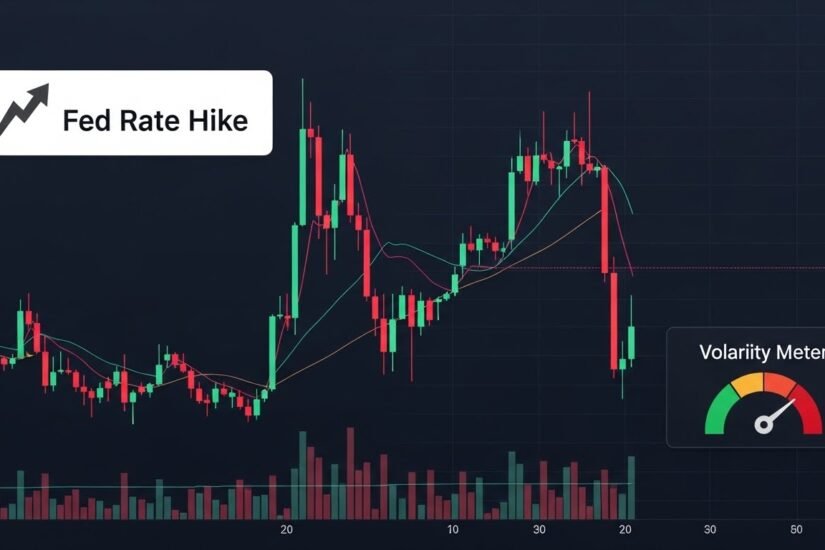
For example, during NFP I’ve seen EURUSD spike 40 pips down, reverse 70 pips up, then settle somewhere in the middle — all in two minutes.
This is why your News Trading Strategy must have rules.
3. The Three Main Approaches to a News Trading Strategy
There isn’t just one way to trade news.
Here are the three primary methods traders use:
1. Pre-News Positioning
You open a trade before the event, based on expected direction.
Suitable for:
- Experienced sentiment traders
- Traders who follow macro fundamentals
- Those with clear bias supported by data
Not recommended for beginners.
The spread can wipe you out instantly.
2. Straddle Strategy (Breakout Orders)
Placing a buy stop and sell stop above and below price before the news.
If price explodes upward, buy triggers.
If it crashes downward, sell triggers.
Great for:
- High-volatility events
- Traders comfortable with slippage
- Traders who want mechanical execution
Risk:
Fakeouts can trigger one order then reverse instantly.
3. Post-News Retracement
This is what many professionals prefer.
You wait for:
- the spike
- the stop hunt
- the pullback
- THEN you enter with direction
This method filters out noise and gives you more clarity.
This is the method I personally use for most news events.
It provides the safest entry and reduces emotional decisions.
4. Step-by-Step: How to Use a News Trading Strategy Safely
Here’s how I approach news using a disciplined system.
Step 1 — Check the Economic Calendar
I check:
- Impact level
- Forecast
- Previous result
- Currency affected
- Correlated markets
Tools like Forex Factory, MyFXBook, and Trading Economics are reliable.
Step 2 — Identify Market Expectations
The market sometimes moves hours BEFORE the event if expectations are strong.
For example:
- If traders think the Fed will cut rates, USD weakens early.
- If investors expect high inflation, gold often rises days before CPI.
Understanding expectation helps you avoid surprises.
Step 3 — Mark Liquidity Zones
Price often attacks:
- Previous highs
- Previous lows
- Stop clusters
- Session highs/lows
This is where fake spikes originate.
Step 4 — Prepare for Spread Expansion
Before news, your broker widens spreads.
On gold, the spread can jump from 20 points to 200 points instantly.
To protect yourself:
- Use smaller lots
- Avoid tight stop-losses
- Wait for stability if unsure
Step 5 — Wait for Confirmation
I rarely enter during the first spike.
I let the market show me its real direction.
I watch:
- Candle structure
- Volume changes
- Momentum slowing
- Rejection wicks
Then I enter with confidence.
This is how professionals use a News Trading Strategy without gambling.
5. Personal Examples From My Own Trading
Let me share two real situations from my experience as a forex trader.
Example 1 — CPI on Gold
Gold tends to explode during inflation releases.
On one CPI day, gold spiked up $18 instantly. Many traders bought.
But the spike was just a liquidity hunt.
I waited for the retest, saw exhaustion, and entered a sell.
Gold dropped $22 in less than 10 minutes.
This is why patience matters.
Example 2 — NFP on EURUSD
During NFP, EURUSD first dropped about 20 pips, then reversed and climbed strongly.
The initial drop was a stop sweep.
The real direction was the reversal.
Waiting saved me.
Patience made the trade profitable.
6. Common Mistakes Traders Make When Using a News Trading Strategy
Most losses during news come from predictable mistakes.
1. Entering Too Early
The first spike means nothing.
It’s usually a stop hunt.
2. Using Big Lot Sizes
Volatility multiplies your risk.
3. Ignoring Spread and Slippage
Your stop-loss might not fill where you think it will.
4. Trading Every News Event
Not all news events are worth trading.
Some barely move the market.
5. Emotional Decision-Making
News amplifies fear and greed.
Stick to your rules.
7. How to Improve Your News Trading Strategy in 2026 and Beyond
Here are methods used by advanced traders today:
1. Use Pending Orders Smartly
Place them only when the structure is clear.
2. Backtest Major News Events
Study how different pairs behaved during previous:
- NFP
- CPI
- Interest rate decisions
Patterns repeat.
3. Track Spread Behavior
Know how your broker behaves during news.
4. Combine News With Technical Levels
News respects structure more often than you think.
5. Follow Market Sentiment
Sentiment tells you what traders expect before data is released.
Master these, and your News Trading Strategy becomes significantly more accurate.
Conclusion
News trading can be risky, but with structure, timing, and discipline, it becomes one of the most rewarding approaches in forex. Now that you understand how a News Trading Strategy works, you can start applying these principles with confidence.
If you’re serious about improving your trading skills and building a foundation with real strategies that work, visit:
👉 stoplosstakeprofit.com
Your home for practical trading education, tools, and guidance.
6 FAQs
1. Is a News Trading Strategy suitable for beginners?
It can be risky, so beginners should start on demo until they understand volatility.
2. Which news events move the market the most?
NFP, CPI, interest rate decisions, and central bank statements have the strongest impact.
3. Should I trade right when the news is released?
It’s safer to wait for the spike and the first pullback before entering.
4. What pairs react most during news?
Gold, GBPUSD, EURUSD, USDJPY, and NAS100 respond strongly.
5. Can I use technical analysis for news trading?
Yes — liquidity levels, zones, and structure still matter.
6. How do I manage risk during news?
Use small lots, wider stop-losses, and avoid entering during the first seconds.